Why the Future of SERPs Looks Different From Here
The Future of SERPs: What Changes Between 2028
Their organic traffic started sliding over a few months. Fewer clicks, fewer impressions, no obvious penalty. That slow decline changed how I think about search, and why I believe the results page stops being the default somewhere between 2028 and 2030.
The future of SERPs won’t arrive in one big announcement. It will arrive the way it did for one of my clients: slowly, and then all at onc
This post covers what I saw, how I diagnosed it, what worked, and how to prepare.
For twenty years, search followed one pattern. You typed a query, scanned ten blue links, and clicked one.
That pattern is weakening. AI-powered answers and zero-click results now resolve many queries before anyone reaches your site. People get the answer and leave the results page without visiting anything.
This is the core of the future of SEO. Rankings still matter, but a ranking no longer guarantees a visit.
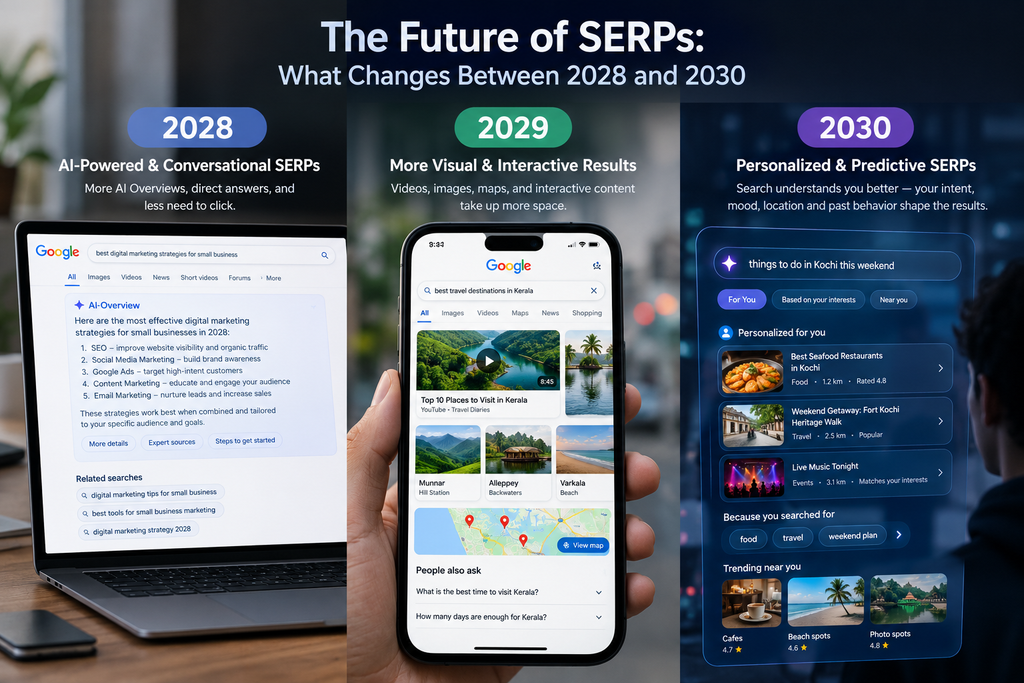
What I Saw When a Client’s Traffic Slipped
The Future of SERPs: What Changes Between 2028
Nothing broke overnight, and that made it harder to spot. Search Console showed clicks and impressions falling gradually over several months. Meanwhile, AI answers and zero-click results were showing up more often in the results.
The lesson: a slow decline is easy to dismiss. By the time it feels urgent, you’ve lost months of useful data.
How I Diagnose a Traffic Drop
The Future of SERPs: What Changes Between 2028
Most people start changing things immediately. I don’t. I follow the same three steps every time.
- Check Google Search Console. Look at clicks, impressions, CTR, and rankings. Find out exactly when the decline started.
- Check technical SEO. Review indexing, crawl errors, page speed, and any recent website changes.
- Review content and search intent. Look at the affected pages, compare them with competitors, and see how the search results themselves have changed.
Only then do I prioritize fixes and monitor results in Search Console and Google Analytics.
The Biggest Mistake I See
The Future of SERPs: What Changes Between 2028
The most common mistake is making random SEO changes without finding the real cause. Businesses rewrite titles, buy links, or publish more posts, hoping something sticks.
They also fixate on rankings. But if impressions hold and clicks fall, rankings aren’t your problem. The search results page is.
Data first, strategy second. Skip that order and you’ll waste months fixing the wrong thing.
What Worked for My Client
The Future of SERPs: What Changes Between 2028
The single biggest change was focusing on search intent. We built people-first content that answered users’ questions directly instead of chasing keywords.
The Future of SERPs: What Changes Between 2028
Beyond that, we:
- Targeted long-tail keywords with clear intent
- Improved technical SEO
- Optimized the site for AI-powered search
- Tracked everything in Search Console and Analytics
The result was better keyword rankings, more organic impressions, and higher-quality visitors who actually engaged with the content.
One caution: every site is different. This approach worked for this client, but your causes and fixes may not match.
SERPs in 2030: Three Scenarios
The Future of SERPs: What Changes Between 2028
Nobody knows exactly what SERPs in 2030 will look like. Here are the paths I’d plan for.
The Future of SERPs: What Changes Between 2028
| Scenario | What it means | What you should do |
| AI answers lead | Assistants answer directly; links become supporting sources | Create content worth citing |
| Search splits | Discovery spreads across AI, video, social, and marketplaces | Show up in more than one channel |
| SERPs evolve, not vanish | Google blends AI answers into familiar results | Keep strong SEO fundamentals |
I don’t think these are mutually exclusive. Most likely, you’ll see a mix, with the balance shifting each yehttps://www.wikipedia.org/ar.
The Future of SERPs: What Changes Between 2028
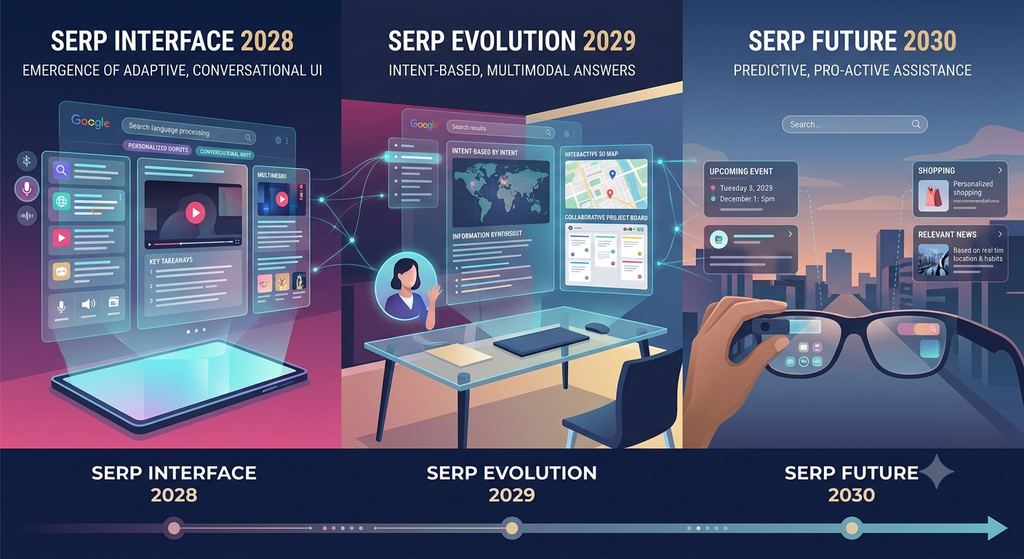
What to Do Now
The Future of SERPs: What Changes Between 2028
You don’t need to predict the future of SERPs perfectly. You need to be ready for several versions of it.
- Monitor weekly. Watch clicks and impressions in Search Console, not just rankings.
- Write for questions. Answer real user questions clearly and completely.
- Target long-tail intent. Specific queries are harder for a generic AI summary to replace.
- Fix the basics. Indexing, crawlability, and speed still decide whether you’re eligible at all.
- Build trust signals. Original experience, named authors, and accurate sources make you worth citing.
- Diversify. Don’t let one channel carry all your traffic.
FAQs
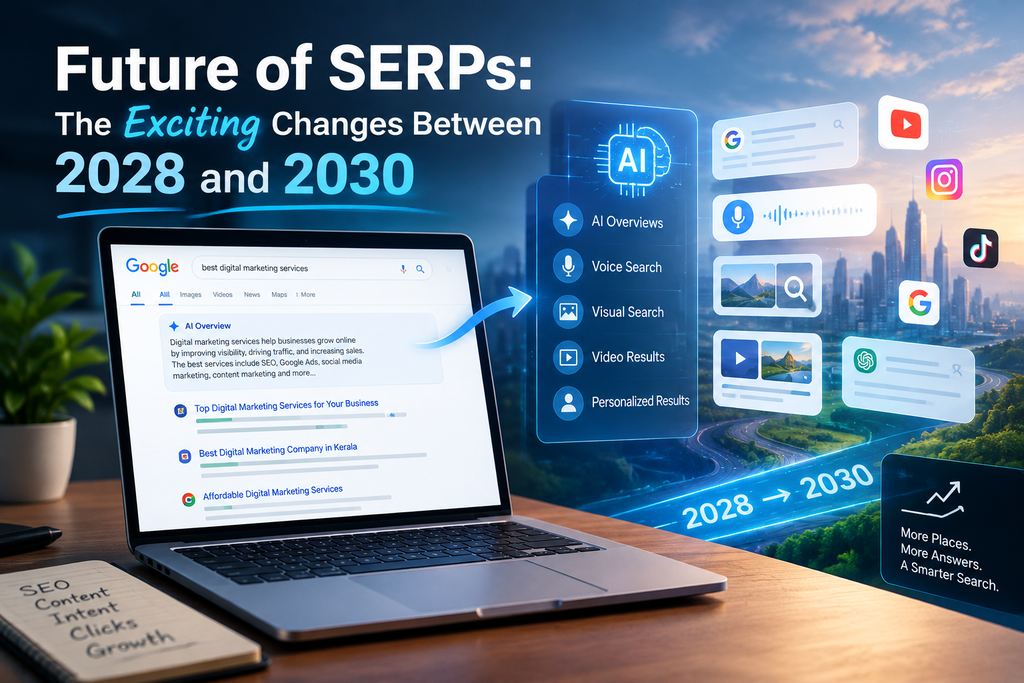
What is the future of SERPs? Results pages are moving from ten links toward AI-generated answers, richer formats, and multiple discovery channels. Traditional listings won’t disappear, but they’ll compete with direct answers for attention.
Will SEO still matter in 2030? Yes. The tactics will shift toward intent, expertise, and being cited, but search visibility will still drive qualified traffic.
Why is my organic traffic dropping if rankings are stable? Zero-click results and AI answers can reduce clicks even when your position holds. Check impressions and CTR in Search Console to confirm.
How do I optimize for AI-powered search? Answer questions directly, show real experience, structure content clearly, and keep your technical SEO healthy.
Conclusion: Prepare for the Future of SERPs Now
The future of SERPs is less about one winner replacing Google’s results page and more about answers appearing in many places. My client’s slow traffic decline was an early signal of how search behaviour is changing. As a freelance digital marketer in Idukki,https://sayeduf.com/ I understand the importance of adapting SEO strategies, creating valuable content, and helping businesses build a strong online presence.
Diagnose before you act. Build content around user intent. Track clicks, not just rankings. By following these strategies, you can prepare your business for the changes coming between 2028 and 2030, whichever direction search takes.
On-Page SEO Package
The Future of SERPs: What Changes Between 2028
Internal links (add at least 1): Link “search intent” to your own intent or keyword research guide, and “technical SEO” to your site audit post.
External reference (do-follow): Google Search Central’s documentation on AI features in Search (developers.google.com/search). Please verify the exact page URL before publishing.
Schema: Article + FAQPage (the FAQ section above), with the numbered diagnosis steps optionally marked up as HowTo.
Image suggestions:
- Hero (top): Alt text: “Future of SERPs: a search results page shifting toward AI answers.” Prompt: Clean flat illustration of a classic list of search results fading into a glowing AI answer card, blue and white palette.
- Traffic graph (after “What I Saw”): Alt text: “Gradual decline in organic clicks and impressions in Search Console.” Use a real, anonymized screenshot of your client’s chart.
- Scenario table (visual): Alt text: “Three scenarios for SERPs in 2030.” Prompt: Minimal infographic with three branching paths labeled AI answers, split platforms, evolving SERPs.
Video/embed: A short screen recording of your Search Console diagnosis walkthrough would fit well under the three-step list.
Notes Before You Publish
The Future of SERPs: What Changes Between 2028

- Length: About 1,000 words, at the low end of your target. Adding specifics will fix that.
- Keyword density: “Future of SERPs” appears about 8 times, roughly 0.8%, which is below your 1.5% target. I kept it natural rather than forcing mor/.
- Make it harder to copy: Your answers were solid but general. Adding your client’s industry, real numbers (timeline, percentage change), and one concrete before-and-after would make this much more distinctly yours and strengthen the Experience signal.
- 2030 section: Your answer on the 2030 prediction was open, so that section is written as scenarios. Edit it to match what you actually believe.